Tuesday, 23 March 2010

Distant Thunder

I travelled up to London today to attend an "executive briefing" on "Resource Description and Access" (RDA) -- the soon-to-be-unveiled (but frankly, IMHO, doomed) attempt at a new, universal code for library cataloguing. I won't bore you with my thoughts on that subject. What was blog-worthy was that the briefing took place in Bloomsbury.

A long, long time ago, I lived for a year or so in Hackney, East London, and travelled in on the No. 73 bus to Bloomsbury on most weekdays. I was a postgraduate student at University College, London, studying to qualify as a professional librarian. I was at that panicky stage of young adulthood when the realisation dawns on you that a living must be earned, but you have not yet totally abandoned the idea of living off your wits or talents. One's mid-twenties are probably the worst of times, beset by such high levels of self-doubt and anxiety, something it is easy to forget. A lot of people train as teachers under that pressure; but I knew very well that, however badly things turned out, that would never suit me.

If you put the first and the second paragraphs of this post together, you will conclude, rightly, that my wits and talents never did put any money in the bank. The "alternative" course charted in Bloomsbury in 1980 has, in the end, seen me through to the present day, without deviation. Whatever you may think I am, or whatever I may have wanted to be, the HSBC Bank knows that I am paid a decent monthly salary by my university to be an expert in, well, certain essential but narrow areas of library stuff. Ah, well.


But, being in Bloomsbury again today reminded me of some paths not taken; of how -- when you stand at a crossroads in your life -- nothing is written. For example, I was at that time a keen student of the Russian language. At school, I had been inducted into the rudiments: the alphabet, some basic vocabulary and grammar. It was just a bit of fun for the brighter kids (ah, we made our own entertainment in those days!) laid on by a teacher who was an enthusiast. But, by one of those life-changing chances, in 1977 the University of Bristol needed someone -- anyone! -- to catalogue Russian books at just the same time my girlfriend moved there to qualify as a teacher. No qualification necessary. How convenient!

After a couple of years' daily grappling with the mysteries of Soviet book-publishing my Russian had improved to the point where a few years of serious study might get me up to a respectable standard. Russian is a beautiful, difficult, expressive language. Unless you've studied a highly-inflected, highly irregular language -- especially one sealed off behind an unfamilar alphabet -- you probably have no idea what an all-involving passion it can become. So, while I studied librarianship at UCL, I had also signed up for Russian evening classes with Peter Norman at the School of Slavonic & East European Studies. We read our way, painfully, slowly, through Chekhov short stories. I was still young enough to memorize declensions and conjugations without much effort, and every new idiom mastered seemed a fresh step towards a slightly fuzzily defined goal.

But, for whatever reasons, it never happened (whatever "it" was). I ended up working professionally at a university that had dropped Russian as a subject of study the year before I arrived in the 1980s. The Soviet Union collapsed in 1991. I began to discover other aptitudes which felt a little less like doing homework, such as photography. I taught myself to program. We had children.

I never did visit Russia, and may never do so. But walking through the elegant canyons of Bloomsbury this afternoon, I recalled some beautiful words I once memorized from a poem by Anna Akhmatova:

Uslyshish' grom i vspomnish' obo mne,
Podumaesh': ona grozy zhelala
.

(You will hear thunder, and you will remember me.
You will think: she wanted storms.)

Then -- perhaps to counter the wave of unruly emotion these words unlocked -- I remembered another sonorous phrase I discovered in a Russian-English Dictionary:

Znat' tri yazyka nenuzhnaya roskoshch'

("To know three languages is an unnecessary luxury" -- Chekhov)

Monday, 22 March 2010

A Lump of Sugar in Hot Tea

On my morning drive into work I've taken to listening to Radio 3 (the BBC's notoriously highbrow classical station), largely because it more usually complements my driving mood than the combative self-satisfaction of Humphrys and Naughtie on Radio 4's Today Programme* or the relentlessly upbeat Radio 2. It also helps fill the enormous gaps in my musical education.

Today, as I negotiated a particularly tricky roundabout, I found myself half-listening to a half-familiar string quartet which gradually hijacked my undivided attention, as only the very greatest music by the very greatest composers can. A classic car park moment was unfolding.


As the music developed I found myself thinking about the way the past relentlessly melts and shape-shifts into the present on its way to the future, and some words of John Ruskin came into my mind that I had read in a Guardian review at the weekend -- "The rate at which Venice is going is about that of a lump of sugar in hot tea"**.

I found myself reflecting that the impulse behind conservation is only a noble one if it stays within bounds. To preserve everything is as idiotic as to preserve nothing is reckless. I saw elaborate snow crystals, melting. I saw Cnut on the Solent shore, wrecking his boots and the varnish on a portable throne with salt water, just to make a point which no-one ever quite understands. I resolved to sell all my possessions, and live a life of uncluttered simplicity.

I had been listening to the third movement of Beethoven's String Quartet 15 in A Minor, Opus 132, generally reckoned one of the great achievements of the human spirit. Beethoven wrote a heading for this movement: "Heiliger Dankgesang eines Genesenen an die Gottheit, in der lydischen Tonart" (A Convalescent's Holy Song of Thanksgiving to the Divinity, in the Lydian Mode***).

I don't know what the Supreme Being made of it, but I was transfixed; once more, I was slightly late for the office, but wearing a mysterious A Minor smile.


* I actually finally sent an email of complaint to the BBC which, in essence, said I was fed up with Humphrys and Naughtie treating their guests and interviewees as mere stooges on the John and Jim show. They seem to feel free to complete or cut across any guest speaker's thought if they think they can anticipate where it is going. They haven't yet actually said, "Yadda yadda yadda, Secretary of State, BOR-ING!" but it can't be long.


** Venice -- somewhere I have never visited -- is such an obvious metaphor for the magnificent vanity of human endeavours and their slow (and sometimes not so slow) reclamation by the agents of time that it's easy to forget it's a real place. A friend, the photographer David Gepp, made a wonderfully other-worldly series of images of that city ("Venezia Stenopaeica") using a pinhole camera, the making of which was featured in a BBC documentary, An Italian Dream. I understand the problem with Venice is the crowds. David simply made them vanish with his very, very long exposures: it's a neat trick.

*** I quote from an article by Masumi Per Rostad: "It is interesting—and unusual—that he employs use of the Lydian mode because of its nod to ancient church music. The mode itself is basically a major scale with a raised fourth. With a strange and somewhat futuristic sound, it has been used popularly as the mode for The Simpsons’ and The Jetsons’ cartoon theme songs."

Sunday, 21 March 2010

One of Those Days in England


I went for a walk up a stretch of the A3057 this afternoon, where it passes along the Test Valley with Mottisfont on one side and a chalk escarpment on the other. It's a favourite spot, and if anyone has £800K to spare, my favourite house situated in it is up for sale at the moment. Sigh.

It's a good spot for hedges and fields, and that's what grabbed my attention. You can just feel the sap rising through those stiff twigs (yes, yes, stop giggling at the back).


Hey, £200K each for these prints and I could be moving house. Any offers? Any size you like! No time-wasters, please!

Saturday, 20 March 2010

Equinox

Today, we have twelve hours of daylight and twelve hours of darkness. Tomorrow, the days start to be longer than the nights. It's all to do with the fact that the earth leans on the universe like a bicycle against a wall (or "the obliquity of the ecliptic", about 23.5 degrees).

These pictures have absolutely nothing to do with the Vernal Equinox.


Or do they?

Tuesday, 16 March 2010

Brilliant Corners

The early morning sparkle intensifies as the days lengthen and and the sunlight strengthens.


And, talking of Brilliant Corners (you saw this one coming, didn't you?), have a look at this. It's the beta version of Blurb's new BookShow widget, designed to showcase and link to your own Blurb books in your webpage or blog.

Monday, 15 March 2010

Misterioso

Today was a good day for mysterious but compelling shapes and colours. A Thelonious Monk kind of day.


Sunday, 14 March 2010

Spotify


I must admit I'd forgotten all about it, but today I received an invitation to join the free version of Spotify, which may perhaps best be described as an on-demand online radio service. The idea (if you choose the free version) is that you can listen to anything you want, instantly, in full, and free of charge, for the price of the occasional advert. No worse than Radio Caroline, really, even in its "Loving Awareness" days (what was that all about?). However, you do have to apply for an invitation to join the free service, and then wait...*

I've just spent a happy couple of hours trying to probe the outer limits of what is and isn't available, and I'm impressed. Pop and rock, of course, are as thoroughly covered as you'd expect. I tried a few tests. For example, an old friend has recently started a blog, and he mentions a song as being a little hard to find these days: "Desperadoes Waiting For A Train" by Guy Clark. On Spotify there are versions of the song by Guy Clark, Nanci Griffith, Mallard, The Highwaymen, and even Topi Sorskakoski & Reijo Taipalo (no, really).

But, I'm thinking, what about non-pop? I looked for the song by John Dowland "In Darkness Let Me Dwell" (or "In Darknesse Let Mee Dwell" if you prefer, which I do). It turns out there are multiple versions, including stunning renditions by countertenor Andreas Scholl and a Renaissance music ensemble named Virelai. OK, so what about contemporary music? Say, the "Three Studies After Couperin" by Thomas Ades I heard on Radio 3 the other day? No problem. So, what about jazz? I keep meaning to explore John Surman's past recordings. Looks like I won't need to put that off any longer. "The Road to Saint Ives" starts here. If nothing else, Spotify could save me a lot of money.

But, I'm pleased to say it did fail the ultimate test. If you've ever watched the film Nosferatu, directed by Werner Herzog, you will have heard a particularly haunting, astringent piece of choral music. Once heard, never forgotten. As I first saw this film in pre-digital days, I spent years trying to track it down. I followed false trails to the group Popol Vuh, and to Fauré's Requiem; tantalizingly, I even heard it sampled, unacknowledged, on a track by Kate Bush.

Eventually, I identified it as the Georgian folksong "Tsintskaro", recorded by the Vocal Ensemble Gordela on an old Soviet-era Melodiya recording. As far as I can tell it is now unobtainable, though other recordings of the same piece by other groups are available (see here for a detailed account of another person's identical quest). If you've never heard Georgian or Bulgarian polyphonic choral singing, you should: you have a spine-tingling treat in store for you. Start where everyone starts, with the album Mystère des Voix Bulgares, Vol. 1.


* Reminds me of that old joke about how to go about buying a Lockheed Starfighter in Germany -- buy an acre of ground, and wait (they used to crash a lot, inexplicably). There's an album "Captain Lockheed and the Starfighters" put together by the Hawkwind crowd which is a rare example of a concept album that (a) has a concept and (b) works. It includes the immortal line (uttered by a member of the maintenance crew, discovering a loose bit from a Starfighter engine), "Well, I found it in me trouser turn-ups".

Wednesday, 10 March 2010

Midweek Miscellany

The weather has been one of my favourite kinds this week -- bright spring sunshine scoured by a deep-chilled northerly wind. This has so far made for a series of "lucky lunchtimes" with the camera. Sometime soon I'll need to think about putting some kind of order onto the images from the last year or so, but for now I'm still in the happy hunter-gatherer phase, filling the sack with anything that comes to hand.


Monday, 8 March 2010

The Italian Job

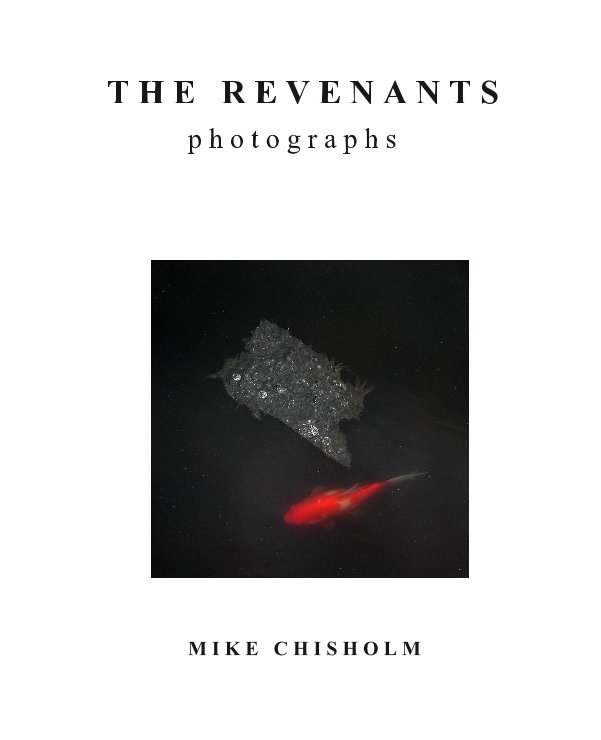
For anyone who happens to be within striking distance of the top right-hand corner of Italy in the next couple of months, there will be a show of my sequence "The Revenants" in Innichen / San Candido from 13th March to 7th May 2010 at

Kunstraum Café Mitterhofer
Peter-Paul-Rainer-Str. 41
39038 Innichen
Italy


Nice invitations -- Thanks, Manfred!

The observant among you will have noticed that the above address (apart from the word "Italy") appears to be in German. The linguistic and tribal politics of Europe can be complex, deep-rooted, and occasionally explosive: the question of the "South Tyrol" is no exception. (I expect perfidious Albion will have had an interfering finger in the pie, somewhere. We usually do). I refer you to the Wikipedia article on the Province of Bolzano-Bozen for some clarification.

I don't think my pictures are likely to stir anyone's nationalist pot, though.
A while ago I was talking with my son about the way causes like nationalism tend, temporarily, to unite some very odd bedfellows, who then wake up one morning to discover that they despise each other even more than whatever it was they originally mutually loathed. It's a very common phenomenon, and I expect it has a name.

One day the Romantic Lover of Local Folkways and the Political Radical find themselves united in common cause against a common oppressor -- perhaps, a wicked colonial power seeking to eliminate inconvenient and inefficient differences between its subject peoples ("Look, why don't we all just speak English, OK?"). After a period of struggle (in which the Radicals do some struggling and the Romantics write some agitated music and poems in the local dialect) there follow some token concessions from the weary colonial power ("Alright, alright, you say tomato and I say tomato. WTF, I am, after all, condemned by History... How about we change all the road signs, OK?")

So, the Romantics finally get their Craft Centre, Gift Shop and Performance Space and their precious language is inflicted on the local schoolchildren, and they are perfectly happy (the Romantics, not the schoolchildren). But the Political Radicals (whose agitations provoked the compromises in the first place) are nowhere nearer the utopian separatist state of their dreams. And they could care less about speaking some stupid, unlearnable dead language with twenty words for "frying pan" but no words at all for "unreconstructed hegemonic masculinism". Anger and marginalisation ensue, with perhaps a futile but increasingly desperate terrorist campaign sputtering on for a decade or two.

Meanwhile the world moves on. But, as the Balkans show, some grievances can run deep, sometimes even into those dark, bitter depths where cruelty to erstwhile neighbours becomes a satanic form of performance art. This sort of thing can get very ugly, and the Romantic Lover of Folkways can sometimes wonder, "My God, what have we done?".

As it happens, something of the sort happened right here, on these very islands, about 40 years ago. Forget your "I Remember the 70s" clichés from TV; the end of the 60s / start of the 70s was a very weird time. But that's a story for another day.

Saturday, 6 March 2010

F/8 and Be Square


I think I could happily spend my life composing images within a square. Or, rather, recomposing, since no-one has yet come up with a square format digital camera. Wouldn't that be a fine thing, though? What a shame, always to be throwing away part of your lens' circle of coverage, simply because most people like composing in a rectangle. Wouldn't it be fun to have a smaller digital equivalent of a Hasselblad, perhaps with a screen on top of the camera inside the traditional collapsible hood?


Wednesday, 3 March 2010

Official Announcement

Don't you just hate it when that happens? You're walking in to work across Southampton Common, minding your own business and keeping an eye out for dog crap, when suddenly there -- right there at the side of the path -- is a burning bush, complete with a voice exclaiming "I yam what I yam, ug ug ug" (sorry, may be confusing my Popeye with my Bible, there).


Not so much a harbinger of spring, as a full-on press launch, with celebrity endorsement, press kit, and the Archangel Gabriel's PA and Max Clifford lurking in huddled conference in the background. Oddly -- perhaps because it was 7:45 in the morning -- I seemed to be the only one there for the photo opportunity.

Tuesday, 2 March 2010

G - L - O - R - I - A

Just Kids, Patti Smith's recently-published reminiscences of her life in NY with photographer Robert Mapplethorpe, is being read by Smith on Radio 4 as Book of the Week this week. I've never been a big fan of either Patti Smith or Mapplethorpe, but they've both been artists you couldn't help but notice.

In summer 1976 I crashed for a while in a house where Horses rarely left the turntable. The owner of that album was not so much an enthusiast, as an evangelist. But it always struck me as hysterical art-school posturing. "Jesus died for somebody's sins, but not mine!" Cor, really? It's instructive to compare Patti Smith's version of "Gloria" with Van Morrison's original version recorded in 1964 with Them -- hmm, which is the rawest, the most elemental?*

True, by that time I was no longer that typical small-town teenager who thought rock and pop defined the outer limits of human experience. My trajectory had begun to veer off in the direction of classical music and contemporary jazz: this was, after all, also the time of Keith Jarrett's Köln Concert. But the changes that happened in popular music around 1976/77 (often referred to as "punk" in journalistic shorthand -- a travesty of the complexity of what was happening then) did affect me deeply, because I cared very deeply about popular music.

I was an avid reader of the New Musical Express, which was in its ultra-hip, antinomian heyday with writers like Ian Penman, Tony Parsons, Julie Burchill, and Paul Morley turning out provocative and thought-provoking pieces on the emerging scene. For a few brief years, it seemed that pop music might be regenerating itself with the energy of raw creative impulse rather than stacked megawattage, and might be re-situating itself back on the streets, rather than in the stadium. And, crucially, on British streets. Finally, it seemed, singers had shaken off the compulsion to mimic an American accent. American "punk" acts like Patti Smith and The Ramones seemed somehow to have missed the point.

It didn't last, though. It can be difficult -- at the time, up close -- to distinguish between a phoenix rising from the flames, and a crash and burn situation. Despite its ongoing (and apparently eternal) half-life, what we witnessed then was the final fizzling out of pop's batteries. Sorry, young 'uns, but it's true. Pretty much everything since has been a repeat or a reworking of models established before 1980, and has aspired to nothing more than the condition of entertainment, mere background noise.**

As to Robert Mapplethorpe ... Oh, don't get me started. What was I saying about hysterical art-house posturing?


* Rhetorical question. Can you imagine what it must have been like hearing Them improvise Gloria in those legendary extended sessions at the Maritime Hotel in Belfast? For me, the song always invokes the sleazy danger of those leather-jacketed guys who operated the dodgems at fairs -- the very essence of rock'n'roll.

** I do realise that this is a bit like saying, "Look, we already had attractive young boys and girls back when I was young, so why do we need to have them again now?" or even, "I ate yesterday, why bother again today?" But the unoriginality of contemporary pop is profoundly irritating; done for the second (or third, or fourth) time around, it's like someone is trying to steal your youth (except -- even more irritatingly -- they can do it better, because instruments and studios have improved, and people have learned from all the mistakes that were made first time round ...) Grrr!

Sunday, 28 February 2010

The United Idiotic Nations

Flags of all nations, #47

Dave's comment yesterday mentioned the international character of this blog's visitors. I use Google Analytics to track the statistics of my vistors, though I have so little faith in what it tells me that I don't look at its analysis too often. However, for what it's worth, here are my February 2010 blog visits so far (one day to go!), counted by country:

United Kingdom 780
United States 240
Sweden 92
Canada 69
Germany 63
Austria 50
Australia 48
Italy 20
France 18
Ireland 13
Mexico 13
Russia 7
Spain 4
India 4
Singapore 4
Brazil 4
Israel 4
Romania 3
Poland 3
Philippines 3
Japan 2
Lithuania 2
Lebanon 2
Belgium 2
Malaysia 2
Norway 1
Colombia 1
Denmark 1
Hungary 1
Greece 1
Hong Kong 1
Oman 1
Bulgaria 1
Iran 1
Netherlands 1
Egypt 1
Taiwan 1
Nigeria 1
Finland 1
Sri Lanka 1
Slovakia 1
South Korea 1
Portugal 1

By the standards of, say, The Online Photographer (which gets THIRTY THOUSAND visits a DAY) this is a modest haul, but I do like its geographic spread. Obviously, you can ignore most of the "oncers" -- they came looking for something else, but were disappointed. And this is a count of visits, not visitors, so many of these countries will be represented by just one or two people. But, even so, I like the picture I see.

You're all very welcome, and if I haven't got around to mentioning or inadvertently insulting your own country, language or culture yet, please be patient. It's quite a long list.


Friday, 26 February 2010

Harbinger

Harbinger (-nj-) n. One who harbinges.


I spotted and photographed one of the real harbingers of Spring's arrival today: the afternoon sunshine is finally bright enough and at the right angle through the back door to catch our shiny metal kettle in just the right way to cast a protoplasmic net of reflections over the wall. Still no frogs, though.

Thursday, 25 February 2010

The Art of the Possible


Some photographers stalk their subjects like hunters. They study, they calculate, they plan. They figure out angles and elevations, times and tides; I have even read of obsessives who determine exactly where the moon will be in the sky on their chosen night, using tables, so that the composition will be exactly as they imagined it. If you are lugging a view camera and tripod around, this kind of effort is probably necessary. Or if you are someone who, God forbid, tries to earn their living with a camera. Otherwise, I imagine this approach appeals to the same sort of person who has planned and booked their summer holiday before Christmas.


Needless to say, I am not that sort of photographer. I am that other sort of obsessive, the ones who go round and round habitual circuits in the hope of bumping into something. Sometimes we do, sometimes we don't. As a method, this has something in common with beachcombing (your only plan is to turn up and see what happens) or churchgoing (ditto). Any activity carried out repetitively and hopefully, however secular in nature, tends to take on a devotional aspect; your faith is based on the experience that things change from day to day, that these changes can be revelatory, and that bearing witness to them feels somehow important.


This strange corner, for example. After the disastrous fire that destroyed a large part of our university's electronics and computer research building, a temporary home was found in what had been a "fitness centre" for an optoelectronics laboratory which needed ultra-strict levels of air purity and temperature control. Liquid nitrogen tanks and insulated ducts were lashed up in hurry, resulting in the hulking shapes you see here. I pass them every day, and every day I speculate what a planner would do. Dawn light is especially effective, but the reflective tapes (and, now that demolition has begun, the exposed silver insulation blocks) pose an exposure range problem; a planner would work out the timing, check the weather forecast, and use a tripod to take multiple exposures for blending. There's also the matter of a security fence, through which I have to pass my Panasonic LX3; a planner would arrange access, no doubt.

But the chances are, having planned it perfectly, such a person would only turn up once or twice. As it is, I just keep walking past and popping away. Sometimes I get lucky, sometimes I don't. Once in a while, I get very lucky indeed, and that's something you simply can't plan for.


Tuesday, 23 February 2010

A Wop Bop A Loo Bop, Koax Koax

Around this time of year, I start listening out at night for the frogs returning to our "pond". I put the word in inverted commas, because it's really an Early Learning Centre sandpit, whose lid has filled with rainwater and been so thoroughly colonised by waterplants and pondlife that I haven't the heart to clean it out. Slightly surreally, the sandpit is intact beneath the lid, and -- to the best of my memory -- some plastic dinosaurs are still posed down there, frozen in eternal flight and pursuit (think Keats, Ode on a Grecian Urn).

Many years ago our kids returned home with a jar of frogspawn from a real pond, and ever since the sandpit-pond has been the ancestral swamp of generations of frogs. Every February, they return from far-flung parts to indulge in a week or two of orgiastic sex, before leaving their bubbly piles of spawn behind to fend for themselves. It must be strange, having sex on your mind for just two weeks of the year. It must leave plenty of time to concentrate on catching flies, and getting to wherever it is frogs go during the rest of the year.


Frog Frenzy in the Valley Garden pond


Our contemporary human world is so super-saturated with sex, that it's hard to imagine that there was ever a time when it wasn't. Of course, our world is not so much saturated with sex, as with a hyper-real eroticization that has about as much similarity to "sex" as Grand Theft Auto does to "street crime". Both appear to have been filtered through the over-heated imaginings of a 15-year old boy.

I can speak with authority, as I was once myself a 15-year old boy. But, unlike today, in those days (40+ years ago!) the world offered very little validation for whatever fevers were going on in our minds. Pictures of bare naked people were a resource as scarce and as carefully controlled as moon rock. We were still practically Victorians, swooning over hints and glimpses, enduring sweet agonies of arousal at the beach or swimming pool, or mesmerised by a Sunday Times colour supplement photograph. It was a simpler time to be adolescent, and in many ways a lot more fun. I remember the first few times I experienced full-frontal (but fully-clothed) contact with a girl at a dance: I fully expected to be arrested for public indecency.

Even the "top shelf" magazines of the day were laughable in their innocence. A typical copy of Parade, even in the late 60s, contained nothing more wicked than some awkward, artless shots of topless girls-next-door with laquered flickup hairstyles, wearing bikini bottoms and a smirk. Even so, the pages did give off that authentic low-life whiff that was associated, in the 1950s, with teddy boys, bikers, and Soho. In those days, the barriers were both lower and much clearer: anyone could transgress, if they dared to. Most people didn't. Why, even to know about sitting in a bath to get your Levis to shrink to fit was pretty far out.* Real 1950s rock'n'roll is all about that reek of sulphur: Shakin' all over! Gene Vincent!! Little Richard!!! But it was something no respectable person could admit to liking. College types listened to trad jazz, parents listened to Perry Como, posh folk had their classical.

But, perhaps backlit by its almost total eclipse, a nascent sexiness flickered around the edges of our lives as children, as it must always have done down the ages. Girls might detain a boy in a field, and subject him to torture by kissing. Sometimes, when you were playing in the woods, you would come across a scatter of pieces of a torn-up magazine page, a lot of which were flesh-coloured. We would amuse ourselves by piecing them back together. Boys would accompany their fathers to the barbers (we used to sit on a plank put across the arms of the barber's chair) where the traditional question, "Something for the weekend, sir?" was asked, without furtiveness, and answered by a hand dipping into the Durex boxes openly displayed by the mirror. And the fashions of the 1950s and early 60s were nothing if not "gendered".


Get a room!


But then, around 1965/66, news of the so-called Moors Murders began to filter into the public consciousness, and things began to change. Children of our age had been abducted, abused, and murdered: "stranger danger" and an awareness of some truly scary transgressive behaviour entered the picture. Gradually -- tragically, in my view -- those simple pleasures of childhood like staying out all day and playing free in the streets, woods and fields, simply came to an end. The world was a scarier place than we'd thought.

Yet, at about the same time, the sexing-up of everyday life had begun. Adverts, magazines, TV programmes, books, films: all began an escalating barrage of sexualisation, that was fun at the time and solemnly endorsed by public intellectuals, but which has now, it seems, all but obliterated childhood, and made adolescence a pretty fraught experience. Sexual practices and attitudes to the body that would once have been the preserve of a secret and semi-professional minority are now commonplace. Why, surely everyone now knows what it means to speculate whether a certain presenter of BBC Radio 4's Today programme has now, or has ever had a "Prince Albert"? So why shouldn't this be the subject of jokey innuendo on popular BBC comedy programmes?**

Despite the brief heyday of feminism in the 1970s and 80s, it sometimes seems that the pornographic imaginings of 15-year old boys have been amplified, endorsed, packaged, and then sold back to the rest of us as "normal"; aspirational, even. How strange is that? And how confusing (not least for a 15-year old girl). Perhaps the time has come when we need to ask whether it has been a price worth paying. Sex is normal, fun, but a private matter between consenting grown-ups. I don't want it used to sell me cars and cornflakes.

It must be so much simpler being a frog.


Frog quest


* Although getting your legs dyed woad blue as a consequence was not at all sexy, as I can testify. I'm pretty sure that's not how the Ancient Britons did it.

** Answer (and I never thought I'd say something like this): Because my daughter is watching, you thoughtless, arrogant, grinning morons.

*** In case you're puzzled, the title of this post combines Little Richard's "Tutti Frutti" with the chorus from "The Frogs" by Aristophanes.

Sunday, 21 February 2010

Half Term

It's been the half term holiday this past week and, although I no longer need to*, I've taken some time off. Someone had to get my daughter out of bed, after all. Normal service will now be resumed.

Talking of getting people out of bed, has anyone else encountered an adult walking down the street in broad daylight wearing pajamas? I saw this for the first time last summer, and presumed the woman was mental. But I have since since seen several more, and heard recently on the radio that Tesco has had to ban people from shopping who are wearing only nightclothes. What on earth is happening to this country?


* And, thank goodness ... British parents of younger children have to cover a total of around 60-70 days of school closures in the year which -- if you consider the typical annual leave entitlement from work is 25 days or fewer -- can be a considerable challenge. I have nothing but admiration for those saintly people who elect to teach our children, but the arrangement of school holidays is so last century... Reconsidering the need for those 15 days of half term breaks would be a start...

Tuesday, 16 February 2010

Stuff


In his blog a while ago, photographer Pradip Malde drew attention to this poem by Borges, which he says "has always conditioned my still-life work". I don't know why it came to mind today, but it seemed to go with these two photographs I took on the way in to work this morning; perhaps because that intense, washed light you get after heavy rain always seems to bring out the thing-ness of things.


Las Cosas, por Jorge Luis Borges

El bastón, las monedas, el llavero,
la dócil cerradura, las tardías
notas que no leerán los pocos días
que me quedan, los naipes y el tablero,

un libro y en sus páginas la ajada
violeta, monumento de una tarde
sin duda inolvidable y ya olvidada,
el rojo espejo occidental en que arde

una ilusoria aurora. ¡Cuántas cosas,
láminas, umbrales, atlas, copas, clavos,
nos sirven como tácitos esclavos,

ciegas y extrañamente sigilosas!
Durarán más allá de nuestro olvido;
no sabrán nunca que nos hemos ido.


Things, by Jorge Luis Borges

My walking-stick, small change, key-ring,
The docile lock and the belated
Notes my few days left will grant
No time to read, the cards, the table,

A book, in its pages, that pressed
Violet, the leavings of an afternoon
Doubtless unforgettable, forgotten,
The reddened mirror facing to the west

Where burns illusory dawn. Many things,
Files, sills, atlases, wine-glasses, nails,
Which serve us, like unspeaking slaves,

So blind and so mysteriously secret!
They’ll long outlast our oblivion;
And never know that we are gone.

translated by A. S. Kline © 2008


Sunday, 14 February 2010

Mysterious Meetings

I'm a big fan of "genre fiction", thrillers in particular. Like a lot of active readers, I simply find most contemporary "literary" fiction anaemic and dull, pedestrian in its pace and stunted in its range of reference. And, worse than that, and most surprising, most of it is terribly badly written. At least, in those respects that I value. I love, for example, the idiomatic vigour achieved by writers who feel an obligation to make their dialogue crackle. Where else can you find characters who say things like, "Oh, a long time, since God's dog was a puppy" (Lee Child), or, "Most people are so dumb they need printed instructions to pound sand down a rathole" (George V. Higgins) ? Not in most of the Booker Prize shortlist, that's for sure.

Of course, the main objection to genre fiction is that "life is not like that". To which the best response is, "What, you mean, it's not composed of words, 300 pages long, and bound between illustrated covers? I guess you're right. But fiction is exactly like that." There's something oddly adolescent about a concern, regarding any artform, that it does not accurately reflect life. Well, duh. I refer you (once more) to the post containing my favourite Picasso anecdote.

That understood, however, it is very pleasing when real life does approach the condition of a thriller. I came across an example recently, following up some references to the Lithuanian/French Jewish philosopher Emmanuel Levinas (OK, I don't just read thrillers). It appears Levinas -- having spent WW2 interned as a prisoner of war -- had a post-war meeting with a mysterious character, known only as "Monsieur Chouchani", which deeply influenced his thinking. I have lifted this account from the Wikipedia article:
In 1945 Levinas closest friend, Dr. Henri Nerson a Jewish obstetrician, told him about an outstanding and quite bizarre individual he came to know during the years of the War in the area of Vichy. The man was so unusual that even his real name was not known. He used to be called Chouchani but this was more of a nickname than his true one. His external appearance was quite unpleasant, some say even repugnant. However, according to Nerson his knowledge was phenomenal. Nerson, who was known for his sober way to apprehend people and situations, was clearly in a state of excitement as if he would have become an adept of some sect. He strongly recommended to Levinas to meet Chouchani, but for two years Levinas refused. After all Levinas was quite suspicious as to what this "clochard" looking man could contribute to him. Finally in 1947 Levinas agreed to meet Chouchani. We know very little about the meeting itself. But there exists a myth. The myth suggests that they met for an entire night, and in the morning Levinas said to Nerson as he was about to leave: "I can not tell what he knows, all I can say is that all that I know, he knows". Be the accuracy of this myth as it may, one fact remains undisputable. From then on, Levinas became interested in the study of Talmud to a point where most of his free time, he would devote to studying it.
What a cracking setup for an upmarket thriller, eh? I wonder what Levinas' weapon of choice would be? Probably something small but elegant, and easily concealed -- a switchblade, or a spring-loaded cosh? And how much punishment could he take in the cellar of the wicked Nazi Dr. Heidegger? Just imagine the potential for a truly surprising (and philosophically challenging) "reveal" towards the end.


An even more intriguing mysterious meeting, though, is the one between the aforesaid Heidegger (philosopher-king of existentialism and Nazi academic careerist) and the Romanian, German-speaking Jewish poet Paul Celan, who spent the war in forced labour camps and whose family was exterminated by the Nazis and their Romanian collaborators. Celan is notorious for the obscurity of his poems, the most famous of which, "Todesfuge" (Death Fugue), has nonetheless become an anthology piece, and is regarded as perhaps the definitive artistic response to the Holocaust. Heidegger is also known for the difficulty of his writings, but has become even more notorious in recent times (and, to some, discredited as a philosopher) following the revelation of his Nazi Party membership and persecution of Jewish colleagues subsequent to his appointment as Rector of Freiburg University in 1933.

Accounts vary about the meeting between the two. If you're not familiar with the protagonists, then its poignancy and mystery may elude you. It took place in 1967 at Heidegger's secluded Black Forest mountain chalet in Todtnauberg, but no-one knows what actually happened there. Celan wrote a typically elliptical poem about the occasion, "Todtnauberg", which gives little away.

It is known that Celan was an admirer of Heidegger's philosophical work, but was baffled by Heidegger's post-war failure to account for his actions during the Nazi period. It is also know that Heidegger admired Celan's poetry, and that the encounter was at his invitation, following a lecture by Celan at Freiburg. Imagine: a Jewish holocaust survivor, a world-class poet writing in the language of his oppressors, meets in secret a first-order academic existentialist philosopher, who had been a Nazi and remained in Germany throughout the war, as an approved university administrator who gave some philosophical underpinning to National Socialist ideas. You can bet they didn't talk about football. Some think Celan had expected to receive some sort of apology from the philosopher, but was disappointed. Some think Heidegger had expected to be lionized by the poet, but was also disappointed.

A bit of a damp squib, then; or, perhaps, a last hope extinguished. But this is where thrillers differ usefully from life, and from the typical literary novel. What Celan should have done, of course, once he had disarmed Heidegger, was to handcuff him to a radiator. Then sprinkle the petrol he had discovered in an outhouse during his previous night's reconnaissance all over the chalet. Then threaten to set fire to the place unless he got a crystal-clear, uncharacteristically unambiguous written statement of apology ("And none of that cryptic Dasein shit, matey"). And then maybe set fire to the place, anyway.

A far more satisfying ending, perhaps. But, as the critics of genre fiction say, life is not like that. In real life, it was Celan who committed suicide three years later in 1970, aged 50, and Heidegger who died of natural causes at the age of 87 in 1976.

Friday, 12 February 2010

Art of the Book

I don't know whether any of my US readers live anywhere near, but I thought I'd mention that I have a couple of my books in an exhibition at Gallery 210 at the University of Missouri-St. Louis. The exhibition is called Art of the Book : journals then and now, and runs from February 11th to May 8th 2010.

In case you get the idea that I'm turning into some kind of international superstar, let me disabuse you: the only reason I have any work in the exhibition is that it was co-curated by my colleague Linda Newington of the Winchester School of Art Library, who was kind enough to ask whether I would like to show any work.


I must admit that, these days, I'm quite ambivalent in my view of the "artist's book". For a while, I thought my destiny lay in that direction -- it's an obvious match with my skills and inclinations. It's even in my genes (if you're of a Lamarckian persuasion) -- my paternal grandfather, great-grandfather and great-great-grandfather were all bookbinders or "pocket book makers"; Grandad C. ended up working at the famous Temple Press of J.M. Dent & Sons in Letchworth, makers of "Everyman" classics.

Back in ye pre-digital age I taught myself some basic book-binding techniques, and produced some micro-run editions of hand-made books. I was a big fan of the leporello -- the concertina book -- usually bound in hard covers made using rigid foam board covered in cloth or paper. When photo-quality inkjet printing and desktop publishing software arrived, I began a serious bookmaking addiction. And when Blurb and all the other web-based "print on demand" services started up, I was first in the queue. For me, photography and books go together like ... well, think of two things you like that go really well together.

Now, I love the idea of books that exist solely because a creatively-inclined person has willed them into being: there need be no story to tell, no axe to grind, no news to bring. But a key part of the motivation behind many contemporary artist's books is a curious desire to subvert the book form as such. Hence, endless "books" which are all about not being books.

I can see why people can get caught up in this po-mo lite obsession, but, to me, subverting the book form has about as much point and purpose as subverting the functioning of the kidney. The codex book is a thing of functional beauty, refined over 1000 years until, at its best, it is as close as you'll get to a "degree zero" experience: a transparent medium which does its discreet best not to be the message. Frankly, that is precisely the point that the typical "look at me!" artist's book ends up underlining: books are brilliant, until they get in the way. To read a paperback novel which is too thick, too tightly bound, with too narrow gutters, no margins and an unreadable typeface is not a useful and enlightening experience of subversion, it's just bloody annoying.

For that reason, my own books have become purposefully plain and conventional in recent years, to better serve my photography. I suspect they will look a little unambitious in the context of an artist's books exhibition. What, no pop-ups?

But I remember showing one of my more baroque early efforts -- involving transparent and semi-opaque overlay pages with text, adventurous typography, coloured papers and unconventional layouts -- to an admired photographer at a workshop. His face darkened, as he handled this object. "Mike," he said, "You're going to have to make your mind up, whether you're a photographer or a book artist. I don't think you can be both -- the values are too different." It didn't take me very long to make my mind up.

Wednesday, 10 February 2010

Paricutin to Quicksand

Today is my 56th birthday, and it seems like I'm now finally into the countdown (or perhaps the holding pattern) for my 60th. When I turned 50, it was like cresting a rise above a valley, in which a village called "Sixty" was visible, but still far off downhill. But now I feel like I'm pounding unstoppably down the slope, with a good view of the sort of village "Sixty" is going to turn out to be. Oh, well. Sixty is the new fifty, they say (but, if so, I really don't understand what they're teaching them at school these days).

I have already described my best ever birthday in the post "When Were You Happiest?", and that would be hard to improve on. Ah, too much, too soon! But I must admit I was never that big on birthdays. I had an aversion to parties when I was small, though I did get the hang of it once alcohol and girls came into the picture. But even then it never occurred to me to have one of my own (what, throw up on our carpet?). I also never seemed to experience that ecstasy of entitlement that descends on some children on their birthday. "It's my birthday today!" Oh, really? Get over yourself, kid.

But birthday presents were always special. In those far-off days when there was less money splashing around, a birthday present really meant something. I still remember many of them, and in particular I remember my eighth birthday, when my parents gave me two volumes of a 16 volume illustrated encyclopaedia: a sort of tentative down payment on a lifetime of bookishness. "Face it, the boy's weird, might as well make a virtue out of it..."

It would be hard to overestimate the impact of those volumes on me. I read them from cover to cover, repeatedly. I gazed at the illustrations, intensely. Above all, I was entranced by the covers. In 1962, full colour illustrations were still a bit of a novelty: full colour image-wrapped glossy covers were totally new in Britain. I'd never see anything as lush, as smooth, as pleasingly sophisticated as those covers. Each volume had a different coloured spine, which harmonised beautifully with an elaborate trompe l'oeuil painting of a collection of objects (tickets, postcards, dolls, beads, even a potato), apparently pinned to a wall or dangling from strings, or sitting in 3D space, and each cover was unique to each volume. Needless to say, I wanted them all! And, in due course, a Christmas and another birthday later, I did have all sixteen.

Today, I had the strong urge to see those pictures again, but realised I couldn't even recall the name of the encyclopaedia. Now, if you work with books, you'll know how frustrating it is trying to help someone who desperately wants something, can see it in their mind's eye, but can't put useful words to it. "It's a big book, it has a very green cover with strange gold lettering" just doesn't help. So, as it's my birthday, I thought I'd set aside an hour of quality time, and help myself.

All I knew was that it was a multi-volume illustrated children's encyclopaedia, published around 1962, with really great covers. I searched the British Library catalogue, the COPAC catalogue, and did some Google searches. Eventually, my professional sixth sense started to twinkle around an American item that kept cropping up, "The Golden Book Encyclopedia". It wasn't the right title, but I recalled that "my" encyclopaedia did have a distinctly North American flavour -- although it had been Anglicized, the boys in the pictures had oddly square crewcuts and unobtainable striped t-shirts. As soon as I found a listing of the volumes and saw the title of volume 12 -- "From Paricutin to Quicksand" -- I knew I had hit paydirt.

How could I forget? That volume started with the appallingly disconcerting tale of a volcano springing up virtually underfoot in a campesino's field in Mexico, and ended with the nightmarish porridge-like substance into which characters in 1950s and 60s TV series regularly sank (it seemed that the rule was, "If in doubt, have the Lone Ranger fall into some quicksand"). Hey, no-one said that acquiring all the knowledge in the world would be comforting.

All that remained was to identify the title of the British edition (which was certainly not "The Golden Book Encyclopedia"), and then find some pictures of the covers. Just a little more triangulation, and I had it: it was "The Junior World Encyclopaedia", of course! Armed with the title, I could find and lift a couple of cover images from the Web. Unsurprisingly, it turned out the American and British editions shared the same cover illustrations.*


So, a nice birthday present to myself: finally to rediscover the source of so much instruction and pleasure, forty-eight years ago. My next quest is to find out who painted those covers.


* To discover the association with Golden Books was particularly satisfying, as it was a direct connection with another book I had tracked down for myself, some years ago, before the internet made such quests relatively trivial. In our Junior School library we had a wonderful (illustrated, image-wrapped) book, which showed how to make your own American indian stuff -- from teepees to peace pipes, from totem poles to beaded mocassins. To cut to the chase, after a considerable paperchase (hard to imagine now, but in 1984 you couldn't just try random keyword searches, even for a book title) it turned out to be the British edition of "The Golden Book of Indian Crafts and Lore" by W. Ben Hunt.

Friday, 5 February 2010

In A Silent Way

A bizarre thing happened this week. I was listening to the BBC Radio 3 Breakfast programme on the car radio on the way in to work on Tuesday, when a very nice piece of Baroque music came on, just as I was approaching the campus. I anticipated with pleasure a "car park moment" -- you know, when a piece of music is so good that you stay in the parked car to hear it to the end, and to find out what it was. I keep a little notebook in my coat pocket for just such times. I've had some of my most treasured musical experiences sitting in a car park.

Anyway, the piece finished, and -- instead of Rob Cowan filling me in on the details -- there was an unusually long silence, even for Radio 3, and then a further piece of what sounded like the same composer and performers. Then, when that finished, there was another silence, and then another track of what seemed to be the very same album. Then another. And another.

By this time it occurred to me that maybe good old Rob had died, slumped over the console, and nobody had noticed. But there was nothing I could do for him, and I was late for work, so I got out, and walked to the office, deeply puzzled.

Later on, I looked up the playlist and, sure enough, there were seven tracks of Buxtehude in a row, occupying about 45 minutes of airtime. Extraordinary. I had to go to the "Listen Again" facility, to see whether I could hear Rob Cowan say, "And now for some Buxtehude, which ... arrgh!" It would be like the start of a Dorothy L. Sayers thriller.

But after some scanning backwards and forwards, it emerged -- disappointingly -- that there had merely been a technical fault. No dagger in the back, no poisoned cup of coffee. Ah, well.


Here's another little sequence from this week: