Wednesday, 29 April 2020

Postcards 2

I made a quick trawl through the blog looking for potential "postcards" and, as I thought, there are quite a few: over 600, in fact. By a "postcard", I mean any photograph that I thought was worth posting at the time, that has kept a high level of "stand alone" interest in its own right, and ideally has not previously been collected into a book or series. Six hundred is more than plenty to play with: I'd hope to end up with about 200 or so, probably arranged in facing pairs, probably using Blurb's cheaper "magazine" format.

As a first run at sequencing them into a book, I have started dragging thumbnail-sized images onto A4 pages in Photoshop Elements. Like any sorting exercise, the trick is simply to get started, without any preconceptions, or commitment to the initial results. As with doing a jigsaw, you will gradually gain a deepening familiarity with what is on the table, so to speak, and begin to spot family resemblances, compelling juxtapositions, and – unlike a jigsaw – start to rank and discard individual images and pairings; the ruthless editing process has begun. You can get about 15 or 16 pairs on an A4 page, and I have so far completed five pages: that's already a book of 150+ pages, at one photo per page. However, there is still a lot of gold in that heap of sand, and plenty of scope for recombinations. It's an enjoyable game, especially in a "lockdown" situation.


As I indicated in the previous post, my intention is not to discover or implant some deep current of meaning running through these pictures, which can be brought out for the viewer's edification by the subtlety of my sequencing. There is none; they're pretty random, and are not "about" anything, other than a repeated affirmation of the classic photographer's credo: Look, I saw this! Also, as I and I'm sure many others have said in the past: there is an important distinction to be made between a picture of something – behold, the Eiffel Tower – and a picture made from something: I think of Henri Rivière's wonderful series of lithographs, Thirty-six Views of the Eiffel Tower, 1902 [1], all of which feature the Tower somewhere within the frame, but few of which are primarily about the Tower.

Similarly, in the best of my own chosen photographs the subject matter will almost always be subordinate to the way it has been seen. Yes, the pictures will have been deliberately paired by me, partly because I find that a satisfying arrangement on the page, but also because it invites another dimension of "seeing", if only by sometimes disrupting some more immediate, superficial reading. In the same way I will be paying attention to the "flow" of the sequence, not to establish any narrative, as such, but simply because that will make for a more satisfying book. To repeat what I said before, I hope that an essential energetic randomness will be its main virtue: charging the air so that meaning can occur, rather than attempting to create and control some message or manifesto.

Wait, isn't that the Eiffel Tower?

1. The 2010 reprint of this book is still widely available, and I thoroughly recommend it to anyone with an interest in graphic art, japonisme, or indeed belle époque Paris and the construction of the Eiffel Tower.

Sunday, 26 April 2020

Postcards


Beaminster, 2009

As I sift through my old posts in search of thematic bronze, silver, and the occasional nugget of gold, I can't help but notice the large quantity of eye-catching but uncollected photographs scattered liberally throughout this blog. Given that I have generally added at least one, and quite often several photos to each post, there must be hundreds of pictures that I thought worthy of sharing at the time, but which have never made it into any more considered sequence or book. Quite often, these have been precisely the sort of acts of "creative noticing" that I most value in photography, with perhaps the only connection between them being that it was me who did the noticing.

One of my all-time favourite photo-books is Kodachrome, by Luigi Ghirri (originally published in 1978, but still available in its Mack reprint). I suppose the outstanding feature of Ghirri's work is the way he elevates the humble snapshot glimpsed and grabbed in passing into an art medium, partly by subtle sequencing and juxtaposition, but also by consistently pointing towards certain confluences of signification that can only exist in the sort of transient, visual samples from real life that the camera excels in capturing. In fact, he exemplifies that attitude towards art-making that photographer Todd Hido expressed in an interview: "As an artist I have always felt that my task is not to create meaning but to charge the air so that meaning can occur."

Inevitably, perhaps, I have now conceived the ambition to make my own "Kodachrome" out of these uncollected photographs. I did do something of the sort with a previous book, Boundary Elements, but that sequence sat within some fairly tight and artificial parameters of time, place, and format. I'm imagining this new project as a set of "postcards" from the whole range, temporal and geographic, of my photographic life. Its very randomness will, I hope, be its main virtue: charging the air so that meaning can occur, rather than me attempting to create and control any meaning. It's a subtle distinction, but a real one. The result could be a baggy monster, or it could be the best thing I've ever done. We'll see.

Winchester, 2011

Thursday, 23 April 2020

My Old Excuse

OK, hands up, I've been so engrossed reading my old posts, looking for thematic common denominators, that I haven't written any new ones all week. I mean, there are nearly 2000 of them, and, although I say it myself, some of them are pretty good. It's been fun, instructive, and occasionally embarrassing, and the time has simply flown. If you're looking for an absorbing way to wile away your time in solitary, why not go back to the beginning of this, or any other favourite blog, and start reading?

So, in that spirit, I am recycling and slightly revising this previous tribute to Shakespeare on his official (but improbable) birthday:

When forty winters shall besiege thy brow
And dig deep trenches in thy beauty's field,
Thy youth's proud livery, so gazed on now,
Will be a tattered weed, of small worth held.
Then being asked where all thy beauty lies,
Where all the treasure of thy lusty days,
To say within thine own deep-sunken eyes
Were an all-eating shame and thriftless praise.
How much more praise deserved thy beauty's use
If thou couldst answer "This fair child of mine
Shall sum my count, and make my old excuse",
Proving his beauty by succession thine.
   This were to be new made when thou art old,
   And see thy blood warm when thou feel'st it cold.
Sonnet 2
It is, of course, Shakespeare's birthday today and, as is customary, we mark the occasion by opening the Sonnets and finding something that seems appropriate. Those first seventeen poems in the sequence (written on commission to urge a young aristocrat to quit messin' around and, like, have some children, forsooth) have never seemed particularly interesting, but when I look upon this particular fair youth of mine whose birthday also falls in April I can't help feeling, yep, you had a point, Will. I'm not saying I was ever beautiful, as such, but: job done. Is it just me, though, or is it cold in here?

By the way, if you've ever found the sonnets hard going, I thoroughly recommend Scottish poet Don Paterson's book, Reading Shakespeare's Sonnets,  as the most accessible way in. His blokeish, but practitioner's view of the sequence genuinely elucidates the connections and the difficulties, and he is happy to award Will a B+?- when he fails to clear the bar he has set himself so dizzyingly high, rather than seeking some spurious explanation. The seventh line in no. 11, here below, is an example. As Paterson says, the problem is that this sonnet cannot really stand alone, as "you need to have read Sonnet 1, at least, to make any sense of If all were minded so ... i.e. 'if everyone thought like you, humanity would die out by teatime'".
As fast as thou shalt wane, so fast thou grow'st
In one of thine from that which thou departest,
And that fresh blood which youngly thou bestow'st
Thou mayst call thine when thou from youth convertest.
Herein lives wisdom, beauty, and increase;
Without this, folly, age, and cold decay.
If all were minded so, the times should cease,
And threescore year would make the world away.
Let those whom nature hath not made for store,
Harsh, featureless, and rude, barrenly perish.
Look whom she best endowed she gave the more,
Which bounteous gift thou shouldst in bounty cherish.
   She carved thee for her seal, and meant thereby
   Thou shouldst print more, not let that copy die.
Sonnet 11
 Plus, if you have an iPad you can get the Shakespeare's Sonnets app from Touch Press, which includes Don's commentary, along with the notes from the Arden Shakespeare, video of various notables reading them, and of course the poems themselves, including a high resolution facsimile of the original 1609 quarto edition. All for less than a tenner!

Thursday, 16 April 2020

Cheap, Good, Fast: Pick Any Two

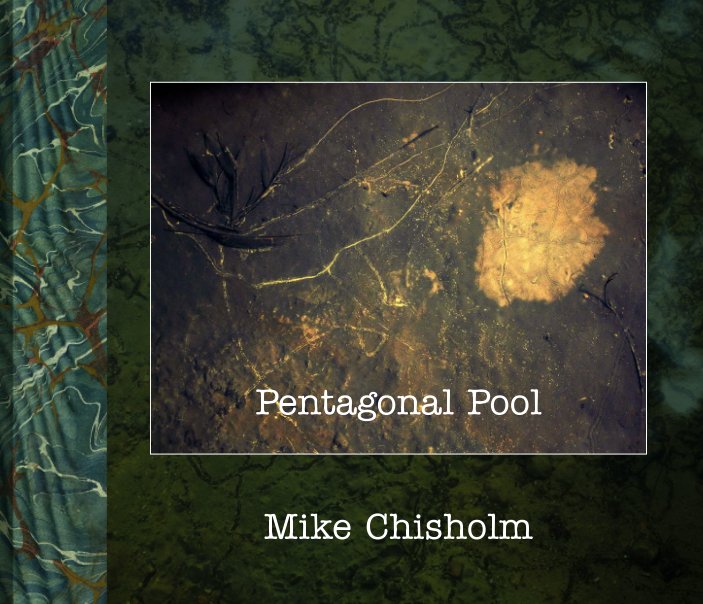
I have now received my two copies of the "layflat", revised edition of Pentagonal Pool, and it is a very attractive object indeed: truly a thing of beauty, sturdily made and very nicely printed. Using it is an unusually immersive experience: to look at pictures spread across two adjacent, rigid 10" x 8" pages is very different from looking at them on the usual curved surfaces with an acute "gutter" in between and, even if I say so myself, these particular photographs do look very good presented this way. What a shame it has to be quite so expensive (although, to my amazement, one very discriminating reader in Houston, Texas has actually bought a copy: thanks!). I have to say, they also arrived individually packaged in a totally unnecessary clamshell "gift box", which I suppose reveals something of Blurb's intended customer-base for these things: wedding albums, retirement gifts, client presentations, and the like.

So, if I've been quiet for a few days it's because I've been busy. For a long time I've wanted to make some sort of "best of" book of these written posts, but the sheer scale of the task – both in editorial time and publishing expense – has always been too daunting, which is why I made those Idiotic Hat Annual CDs: it was far simpler to create a set of PDFs containing everything than to boil down the nearly 2000 posts I have published since 2008. A classic instance of Pascal's apology for sending such a long letter, having lacked the time to make it shorter. But it occurred to me recently that a series of small, cheap selections might actually be preferable to yet another lavish production that no-one can afford.

The key to this, I realised, would be to drop all or most of the pictures, and to use Blurb's inexpensive "trade" book format, printed on their cheapest "B&W only" paper. That way, even a fairly substantial little book of around 140 pages could come in at under £5. Any remaining pictures would look pretty awful, but that wouldn't matter. It surprised me, once I started to look, how many written posts could stand alone, stripped of their illustrative matter, and lightly edited to remove any direct references to the accompanying photographs, as well as to links to other posts and external material on the Web.

The idea of making thematic selections was the other key. It's a general rule in life that 80% of anything is rubbish, and blogs are no exception. Of the 2000 or so posts in this blog there are probably 400 that warrant stand-alone publication, plus some borderline cases that have a certain amusement or novelty value. Let's say 500, which is still quite a lot, given that a typical post would occupy about 1½ pages in print; moreover, deciding which posts qualify would remain a major undertaking. But, once you apply a thematic filter, everything falls into place quite quickly. You start out looking for caprines, which is a far simpler, if tedious task, and then you sort your little herd into sheep and goats.

My first thematic thoughts were things like music, my home town of Stevenage, and, oh, the meaning of life, the universe, and everything: subjects I've returned to repeatedly over these years. Repeatedly and, it has to be said, somewhat repetitively. You can be forgiven for, in effect, rewriting the same post every few years – perspectives change, new information comes to light – but when such posts are collated into a single sequence, a certain amount of further selectivity becomes necessary: not just sheep, but the prettiest sheep.

For now, anyway, I have decided to avoid any photographic topics, for the obvious reason that more actual photographs might be required, raising the cost of production. I want these books to be cheap. The first (music, probably) is not ready yet – I want them to be good, too – but shouldn't take too long. However, as the saying, goes: cheap, good, and fast – pick any two. To keep the cost down even further, I'll probably buy copies in bulk (as many as, like, ten copies!) and distribute them myself. Which, if past experience is any guide, will probably amount to giving them away.

So that's what I've been up to: how about you? I've been surprised by the absence of comments during this period of enforced leisure. I do hope you're not enslaved to interior decoration, confined to bed, or, ah, worse. Or maybe you, too, have been happily busy in the Cave of Making?

Saturday, 11 April 2020

Easter Snow


The forecast is that it's likely to nudge, if not exceed 25° C (77° F) here on the south coast of England over the Easter weekend, before chilling off dramatically by Monday. My memories of previous Easter breaks are coloured by this typical variability in the weather, which is compounded by the fact that Easter is a "moveable feast": that is, one not falling on a fixed calendar date. In fact (pay attention at the back) Easter is very moveable indeed: it is celebrated on the first Sunday after the full moon after the vernal equinox, the so-called "Paschal full moon", which this year was also a "super moon" on 8th April, but which last year fell on 19th April, and can be as early as 21st March (but never earlier: the spring equinox being fixed, ecclesiastically-speaking, on 21st March). But, don't ask me why, it's complicated. Let's just say it's a cross-cultural mashup of astronomy, religious observance, and the fulfilment of certain Old Testament prophesies, all seasoned with a strong flavouring of calendrical inexactitude.

Add to this the fact that we have spent the last forty Easter breaks in mid-Wales, and the innate variability of weather and timing gets further complicated by geography. In hill country in spring you can expect any combination of snow, rain, fog, and solar radiation strong enough to give you sunburn: it's just part of the package at lambing time, often all within the same day. This particular set of photographs were taken in 2013, when Easter Sunday fell on 31st March, the best part of two weeks earlier than this year. It had snowed quite heavily the week before we arrived, and remained "deep and crisp and even" in sheltered pockets, despite strong sunshine. This was a relatively light dusting, however: in a previous year a post van had become stuck in a massive drift blocking the lane just beyond our rented barn-conversion, the postie having foolishly decided to ram his way through.

I don't think there'll be snow in Wales this coming week, where we would have been were it not for you-know-what, but you can never be sure. Although I can be pretty confident in predicting there won't be any here in Southampton, way down south and a mere 80 feet or so above sea-level. We haven't even had any winter to speak of this year: I think I scraped frost off the car windscreen twice. Looking at the forecast, I may yet have to break out the shorts and sandals.


Thursday, 9 April 2020

The Windows of Eden


Before the Pentagonal Pool, there was the university's Valley Garden. On the same backup drive where I recently found the original "Dry Light" exhibition files I also found a directory I had called "Glass & Ice" which, among other glassy and icy subjects, contains about 100 photographs I'd taken in the early years of this century in and around the semi-derelict glasshouses in the Valley Garden.

I have described this little Eden before, and my eventual expulsion from it, and this is also not the first time I've rediscovered the photographs taken in there: some kind of "Garden" project has always been on the cards, although it has somehow proved elusive. This cache is a true goldmine, however, because it gathers together photographs that explore a single aspect: the sheer visual pleasure of neglected panes of glass as a 2D surface, whether cracked, covered in condensation, or veiling the mysteries that lie beyond. These may yet be the key that finally unlocks that much-postponed "Garden" book.


Now, anyone who follows photography will be aware what a cliché this has become. Fay Godwin's wonderful little book Glassworks & Secret Lives (Stella Press, 1998) consolidated the genre, along with John Blakemore's rather more claustrophobic still lifes in Inscape (Zelda Cheatle, 1991) and The Stilled Gaze (Zelda Cheatle, 1994), and in its own way Keith Arnatt's Rubbish and Recollections (Oriel Mostyn, 1989) defined a relevant visual language. Of course, in those essentially pre-Web days, one didn't really know what was going on in the wider world, except by stumbling across books or features in magazines. I'll never forget walking up London's Charing Cross Road in 1998 and being stopped in my tracks by the limited edition hardback of Glassworks & Secret Lives on display in the shop window of Shipley's Art Bookshop. On going inside and opening a copy, I'm pretty sure I exclaimed FUCK!! on seeing the pictures inside: I had been convinced I was working a highly original vein of imagery. Than which, of course, no greater illusion exists in the world of photography: someone, somewhere, has already done everything. Everything. Not necessarily better, though, and definitely not through your eyes: originality of subject matter is never really the point.

So, never mind: these are still satisfying photographs in their own right with which, for whatever reasons, I failed to do anything at the time, but which still possess whatever longer-term merits they had then.  All of them were taken using either an Olympus C5050 (5MP compact) or a Canon EOS 350D (8MP DSLR), and I am impressed by the quality of those 8MP Canon files, in particular. They may only be printable to A4 size at a native 300 dpi, but they are beautifully soft and clean – virtually no "noise" at all – with that subtle Canon colour fidelity I had forgotten about. Of course, the intervening 15 years of experience in processing digital images means I have been able to make a far better job of making pictures out of them, too. Maybe their time has finally come.


Tuesday, 7 April 2020

Never Say Never: UPDATE

Sorry, I hadn't realised I had to make the Blurb book publicly available in both versions, in order for the link to the preview to work. Now corrected!

Monday, 6 April 2020

Never Say Never


Pentagonal Pool run dry

I had pretty much convinced myself that I wouldn't use Blurb's "layflat" book format again, much as I like it. It's very expensive, and – as I discovered last time – the books are actually made in the USA, despite being created via Blurb UK, and therefore incur an import tax on arrival. Ouch! But then recently I found a cache of the original files I'd made for an exhibition in 2004-5, Dry Light, which mainly made use of the digital images I'd been taking at the tail end of the project that had occupied my daily lunch hours back in my days of wage-slavery, photographing what I had dubbed the "pentagonal pool" on the Southampton University campus.

The idea behind these files was that, in order to compensate for the small maximum printable size of these digital files (mainly from a 3MB camera), I would arrange them in long panels of multiple images, which could usefully exploit the patterns and variations that arise when a single but extremely variable subject is photographed repetitively over a long period of time. To this end I created a number of large single files combining three or four photographs, which could be printed for framing on the "panoramic" paper that Epson used to sell (essentially an A2 sheet cut in half lengthways). I thought these files had gone missing long ago, but found them hiding in a sub-directory on a backup drive, and was pleasantly surprised by their quality.

I then remembered that the problem, from a book-production point of view, had been that at the time Blurb's ready-made page layouts could not accommodate a single file laid across a double-spread of pages. The only workaround was to put two horizontal pairs on facing pages, but this gave a quite different impression to the original idea and, worse, there was no way to make use of the groups of three: the central image would at best have to be cut in half and would anyway be hopelessly distorted by the "gutter" between the pages. So the original Pentagonal Pool book of 2006 was, in one sense, a triumph of creativity over adversity but also, it has to be said, a bit of a travesty of my original intention.

Having rediscovered the original exhibition files, though, my immediate thought was that these would be perfect for a "layflat" book. Which they are, and here it is:
Now, you know and I know that no-one is ever likely to buy a copy of this book [1] – it would cost them £60, after all, plus any import tax for non-US customers – so I'm not going to make it publicly available, except as a PDF for £4.99. However, if any reader of this blog does want to buy a copy, by all means send me an email (my address is in the "View My Complete Profile" section at top right) and then I'll either pass on a link so you can buy one directly, or we can wait until Blurb's next 40% off! sale, and I'll buy a copy on your behalf for them to despatch to you.

Pentagonal Pool brimful

1. I do generally buy at least two copies of my own books: one for me, and the other for deposit in my old college library, which has been in continuous operation since 1263 and unlikely to be going out of business any time soon.

Saturday, 4 April 2020

Coincidence Be My Guide


Wrinkly Brautigan, ca. 1971
(hey, nobody told me you needed to stretch the paper...)

When it comes to cultural matters, I'm very susceptible to being led by coincidence. This is not as irrational as it sounds: there's a huge difference between, say, coming across two or more references in a matter of days to the same painting or painter, previously unknown to you, and the sort of uncanny coincidences that prickle the antennae of deluded seekers after signs and portents. For one thing, the former are the result of real human activity: they're straws in the wind, a buzz, a signal that something of possible interest to you is stirring in the contemporary world. The latter are, well, just coincidences.

Obviously, when you are young, pretty much everything is new and unknown to you, and the busy criss-crossing of tracks means the world is thick with meaningful coincidences. I remember how, aged 17 in 1971, the placename "Big Sur" meant absolutely nothing whatsoever to me, but then I read Richard Brautigan's story A Confederate General From Big Sur (does anyone read him any more?), and I immediately started coming across references to Big Sur everywhere: as a novel by Jack Kerouac (does anyone read him any more?), as the home of numerous bohemian notables of the 40s and 50s, as the haunt of photographers like Edward Weston, as the location of the Esalen community, and so on.

Such positively-charged noticings are not so much coincidences, strictly speaking, as a curious mind flagging up a new bit of data as possibly related to a previous bit of data: they are experienced as coincidence because you lack any context that would explain the relationship. It is not accidental, after all, that Big Sur turns up in the contexts it does, but I had no way of knowing this. And, until I had read the Brautigan book, I was not primed to notice it. Cultural and social moments and movements always have certain people, places, and things that act as common denominators, many of which are no more than the arbitrary specks of dust around which the crystal can form. But if a moment or movement achieves even a temporary degree of media saturation – perhaps through reviews of a recent book, or an exhibition, or even an obituary – quite often it's precisely these random elements that you notice first, vividly experienced as apparently unconnected coincidences. How many mentions, for example, did it take before you first realised the multifaceted significance of New York's Chelsea Hotel, LA's Laurel Canyon, or the place of St. Ives in British art history?

Now that I'm older, after a further 50 years of education and experience, it takes rather more to get my attention, but it still happens: after all, ignorance is a lifelong condition. For example, looking on Amazon Prime recently for something low-key but entertaining to watch, I settled on Tobago 1677, a documentary about undersea archaeology, and the 17th-century struggle between the French and the Dutch for control of this tiny foothold of empire in the Caribbean. It wasn't a great programme, thin on actual archaeological results and overlong, but was quite informative about the events and personalities leading up to one of those historical events that (I presume, in my ignorance) no-one but specialists will have heard of, the Battle of Tobago. In the well-established style of such documentaries, a lot of the footage is made up of what used to be called "rostrum camera" work, but is now generally known as the "Ken Burns effect": the use of camera movement, voice-over, and music to enliven and add narrative force to static contemporary visual documents like engravings, portraits, and photographs.

One of the key players on the Dutch side in Tobago was someone apparently called commodore Jacob Benckez, or perhaps Bénquez – it sounded like an odd name for a Dutchman – who was a bit of an action man in that swaggering age of seafaring action men. So, naturally, his portrait played a leading role in the Ken Burns manner, the camera slowly zooming in on a pair of slightly worried-looking eyes (voiceover: "Benckez was a unusual man..."). As so often, the portrait was unattributed: just another sombre Dutch oil painting from the stock library. But then a few days later I was reading the latest copy of the TLS, in which there is a review by Ferdinand Mount of a current exhibition in the National Gallery (temporarily closed, sadly, like everything else), "Nicolaes Maes: Dutch Master of the Golden Age". In it I read, "... the naval trophies carved and gilded in the frame of the portrait of Jacob Binckes, a naval officer who was killed with half his garrison when a cannonball blew up the powder magazine during a French attack on the Dutch colony of Tobago". Whoa, hang on... That there Binks must be "Benkez" from Tobago 1677... Coincidence! Not to mention connection, correction, and redirection.

Then I went on to read a piece by Simon Schama in the same issue: a reprinted review of a 1992 exhibition, "Rembrandt: the master and his Workshop", in which he comments disparagingly on a portrait by Maes (pronounced "Mars" apparently – Dutch pronunciation is a minefield) of arms magnate Jacob Trip (Tripe? Dreeb?) which was once attributed to Rembrandt; at which point the nudging started to feel more like a solid push. But to where, exactly? Maes? Binckes? Rembrandt? Golden Age portraiture? Tobago? Exploding powder magazines? I'm happy to wait for the next coincidental shove to find out.

It goes without saying that I'm no scholar, and, much as I love art, I'm no art historian, either. All these names, dates, places, events, and the links between them may well be commonplaces to the Schamas and Mounts of this world, but not to me. I'm perpetually at the stage where new discoveries are best made not by diligent study, but by following the buzz of "coincidence". Which is why I like to let such coincidences be my native guide through the vast territories of my ignorance; if it's not exactly the aleatory method of The Dice Man, it's also very far indeed from the painstaking methods of scholarship, and a lot more fun. And, simply by chance – by coincidence, by serendipitous connection – I can now point out to Mr. Mount that the fateful powder magazine on Tobago was in fact not exploded by a cannonball but by a mortar shell that ignited a gunpowder trail dropped by a panicky powder monkey which led, inevitably, back to the magazine. I know it's true, I saw it on TV.

"As above, so below": passing portent at St. Audrie's Bay, Somerset
(Fuji GS645S on Jem Southam workshop, 1995)

Wednesday, 1 April 2020

Hiraeth


Because of the restrictions on travel, this year – for what I think is the first time in 40 years – we won't be going to Mid-Wales at Easter. Which is particularly annoying, as for the first time in several years we had managed to book our favourite accommodation, a large, comfortable barn-conversion on the top of a hill near Penybont. It goes by the name of Hiraeth, which is one of those Welsh words that seems to have no direct equivalent in English, but lies somewhere in the region of "homesickness", "nostalgia", "longing", and "regret", that heady brew of mixed feelings exiles have for a homeland lost in time and space: you get the picture. So, as a name it seems very appropriate at the moment, even though I don't have any Welsh ancestors [1]: like your elective family, it seems you can adopt a new Heimat.


Hiraeth the ex-barn is ideally placed to experience and photograph the full range of landscapes in the area. Not least because, being perched high on one side of a SW-NE oriented valley with a handy balcony outside the bedroom, you get to see the sort of scenic sunrises and sunsets usually the preserve of the hard men of landscape photography, with their bivouac bags and thermal underwear, and go back to bed afterwards with a cup of tea. It is also nicely situated between the cultivated valleys around Llandrindod Wells down below and the austere uplands of the Radnor Forest up behind, as well as within a comfortable drive of a number of attractive destinations either side of the border, not to mention at least one Michelin-starred restaurant.

But not this year. Or at least not, as is our tradition, at Easter, when the farms are loud with all-night lambing sheds, the long-distance ramblers are out on the Offa's Dyke Path, and there could be snow or there could be sunshine, depending on the mood of the weather. So, instead, I'll continue to raid the landscape backfiles and put up some galleries of Radnorshire [2] scenics, perhaps even including some of the truly nuclear sunsets I have watched going down beyond the far side of the valley.


1. AFAIK. My maternal great grandfather is unknown, but must have been in Liverpool around March 1896, so not impossible.
2. Technically, Radnorshire no longer exists, having been subsumed into the mega-county of Powys around the time we started visiting but, like the Ridings of Yorkshire, it continues an outlaw existence as a necessary geographic and cultural category.

NOTE: I have now received a paper copy of Byrne and Swinton's Guide to Edinburgh, and it is good to go, so I've made it available for purchase. I know how much you'd be waiting to hear that!

Monday, 30 March 2020

It's Not Rocket Science


In the interests of cheering everyone up, may I bring your attention to this article in today's online Guardian. Hilarious... It made me weep with laughter, and still does, whenever I think of it.

That is all: carry on.

Saturday, 28 March 2020

On Clifton Down


Here are a few more photographs from my excavations into the dusty backfiles, looking for overlooked "landscape" treasure. The first two may look almost sequential – same place, approaching storm, clearing storm – but in fact the one above was taken at 11:49 on 25th November 2015, and the one below at 16:14 on 26th April 2016. They may also look rather like a drone was involved, but in fact there is a car park on the top of the cliffs at Clifton Down, where in summer an ice-cream van is parked, and from which a zillion snaps of this view must have been taken. I suppose the only claim to distinction for my efforts is a willingness to endure hailstones and driving rain to get a more unusual shot.


If you take a short walk further along the clifftop and look back the other way, you get a view down the Avon to the port at Avonmouth, with the Bristol Channel beyond, and the hills of Wales looming on the horizon, north-west of Newport. And there on the right is the fence around that car park, so conveniently placed for a view of the Suspension Bridge. Despite the magic of compression performed by a long focal length lens, those nearest blue hills are something like 20 miles away, with the Brecon Beacons a further 20, as the crow flies.


Talking of crows, being high, windy, and frequented by humans who are inexplicably prone to scattering tasty grub all over the place, it's a popular spot with scavenging birds. Which in turn makes it a handy spot for birds that find other birds rather more tasty than picnic scraps: peregrine falcons nest on the cliffs, and most days with a bit of luck you can catch sight of them flying rapidly overhead, or (with the aid of binoculars) sitting on their favoured perches in Leigh Woods on the far side of the Gorge, wondering whether it's time for lunch yet. Pigeons, though, not crows, are the peregrine's snack of choice, and it's impressive to watch the way pigeons dash across the vast vacancy of the Gorge at top speed, jinking like hares to throw off any unseen predator's dive. I'm surprised they haven't evolved the equivalent of the "chaff" thrown out by military aircraft to divert heat-seeking missiles. Or maybe that is precisely why pigeon-droppings are so ubiquitous...


Thursday, 26 March 2020

Buying and Selling


The National Monument, Calton Hill

It's a shame not to be able to take full advantage of the bright spring sunshine outdoors, but this sort-of enforced sort-of lockdown does have its up-side: for one thing, I've already completed the little book I mooted in the previous post. I decided to stick with the title Byrne and Swinton's Guide to Edinburgh, and you can see it here:
Should you feel like buying a copy, I recommend the relatively inexpensive PDF version as, if it is viewed properly [1], you will then get the full "flicker-book" effect as you page through it, whereby the couple remain static while the backdrop behind them changes. To be honest, I also recommend it because I haven't yet received a paper copy myself, and won't for some weeks, so it would be foolish to make it available for sale until I have had a chance to check it over for errors.

Also, an interesting thing that I hadn't noticed before is that Blurb's embedded free preview (as above) of these small, so-called "trade" books does not respect their native aspect ratio (they're tall and thin, like the old foolscap paper) and squidges the page to fit the more typical Blurb book shape. Hence Tilda Swinton's dramatic facial bone structure gets an unflattering podgy makeover. To see it as nature intended you need to use the PDF.

But, listen, I'm fully aware that you have no intention of buying anything. Hardly anyone does. I was pleased and not a little flattered to get an unsolicited testimonial on Andrew Molitor's blog recently, but that was the proverbial exception that proves the rule. It means a lot when someone appreciates your work; it means even more when someone buys your work. As I'm sure I've said before: cash purchase, not imitation, is the sincerest form of flattery. But here's the thing: much as I appreciate the compliment, and always will [2], I do not depend on sales for income. I'm a retired professional with a decent pension, now further topped up by my state pension. Obviously, it's not entirely accidental that I am now in this fortunate position – choices were involved – but I nonetheless count myself lucky.

However, that's not something that most active artists and musicians can look forward to, literally living as they do in the "gig economy", not to mention all those allied trades that keep theatres, galleries, small publishers, and music venues running. The current situation is desperate for many, but then it's always been a pretty hand-to-mouth way of life, and probably always will be, until they listen to their parents, give up this arty nonsense, and get a proper job in McDonald's. Or, as the luckier ones do, get a day job teaching the next generation of young hopefuls. As I say, choices are involved.

So, if you're fortunate enough to be in stable, well-remunerated employment and you come across a book, a picture, or some music that you like (I'm talking about struggling unknowns, here, not me or the overpriced work of established "names"), then I suggest that you should buy it, and – once things return to normal – if there's an interesting play, concert, or exhibition on locally then you should buy a ticket and see it. And, if you've booked to see something that has had to be cancelled due to the coronavirus, FFS don't ask for your money back! You can afford it: think of it as an arts tithe of 5-10% of your income annually that you invest to keep the pool of talent healthy, and not the exclusive preserve of unsalaried interns, trust-fund bohemians, and fraudulent crowd-pleasers.

On Calton Hill

1. It is especially important that you set your PDF viewer (typically Acrobat) so that you are seeing a two-page view with a separate cover page, ensuring that the correct pages face each other. In Acrobat the settings are:
Under the menu "View" / "Page Display" choose all of:
"Two Page View"
"Show Gaps Between Pages"
"Show Cover Page in Two Page View"

2. To the extent that, if you are willing to identify yourself, you may even receive free stuff!

Monday, 23 March 2020

Byrne & Swinton's Guide to Edinburgh


Back in December 2018 I spent a few days in Edinburgh, courtesy of one my partner's academic gigs. On the last day I had a brief encounter in the Royal Scottish Academy with painter and playwright John Byrne and actor Tilda Swinton [1], which resulted in this snapshot portrait of the two. You may recall that I had a little fun cutting them out and posing them in front of a couple of different Edinburgh backdrops.

For some reason, this week I felt like revisiting those pictures, and in particular that idea of dropping the celebrated pair in front of various Edinburgh scenes. I could see there was the potential for a book of some kind there: I suppose in the back of my mind was the example of Willy Puchner's book, Penguins – Traveling the World (Könemann, 1999), in which he posed a pair of large model penguins in front of tourist sights worldwide (actually posed them, that is, not transported them by the magic of collage, which in the digital rear-view mirror of 2020 strikes one as mildly insane).

It would be nothing grand – these were all taken with my tiny "travel compact" Fuji X20, after all – but a home-made accordion-fold book might work, perhaps, or maybe even one of Blurb's little "trade books". Like me, I expect you have been receiving a flurry of emails from various utilities, services, and suppliers, laying out their responses to the corona virus crisis, and being as reassuring as possible under the circumstances; for their own benefit, I suspect, as much as anyone else's. Blurb has been no exception and, as I value the service they provide (and worry that their frequent discount sales indicate underlying financial problems), I feel inclined to support them by sending a little more business their way, so the latter is most likely.

But first, as proof of concept, I thought a poster-style layout of a few might be useful:


Actually, I was surprised how many usable "backdrop" views of Edinburgh I'd come away with after just 2½ days at the darkest time of year, and so far I have assembled twenty-four, which is more than enough, really, for such a slight idea. Like so many slight ideas, of course, it may or may not come to fruition, but I like the sort of flicker-book way the couple in front remain absolutely static, while the background behind them constantly changes.


1. And friend of John Berger: if you're a Berger fan, it's worth getting hold of the DVD of The Seasons in Quincy: four portraits of John Berger, in which Swinton has conversations with the grand old man of writing about art, shortly before his death.

Friday, 20 March 2020

Shakespeare's Sonnets Abridged


Hope on the horizon...

In the process of going through my backfiles looking for "landscape" photographs, I came across this one. It's the view from the balcony of the flat of the parents of a friend I met there in October 2015, following the death of his father. It was 8 a.m. and I'd had a rough night following a little too much wine and spirits and a few hours of intermittent sleep on a lumpy sofabed. Looking out of the window, I saw this and grabbed my camera. Somehow it's taken me nearly five years to get around to processing it. It reminds me powerfully of a similarly hung-over dawn on the East Coast, half a century ago, when I woke up on the beach somewhere north of Great Yarmouth, having failed to make it back to the tent I was sharing with a schoolfriend in California. No, not that California: California, Norfolk, a tiny place which has more or less tumbled into the sea in the intervening five decades. Which, for Steely Dan fans, may have a certain resonance.

Anyway, here's a thing. Today I came across the abbreviation TIL in a comment on another blog, and had no idea what it meant. This Is Laughable? Totally Inconceivably Ludicrous? So I looked it up, and apparently it means "Today I Learned"... So, TIL that TIL means "today I learned". Heh... The New Thing Learned For Today file can be shut early and with an unusually reflexive thump.

Talking of Shakespeare and self-isolation (yes, we were), here's something to cheer you up. The incomparable Zach Wienersmith (whose Saturday Morning Breakfast Cereal cartoons are witty, weird, dark and, above all, dizzyingly frequent) has made available – free to download – some of his PDF books as a COVID-19 Book Pack, and I would draw your attention in particular to Shakespeare's Sonnets Abridged Beyond the Point of Usefulness. Which, if you know the sonnets, or have even only the vaguest acquaintance with them, is both insightful and hilarious.

Sample (Sonnet 2):

Weinersmith:
When forty winters shall besiege thy brow
And dig deep trenches in thy beauty's field,
Thy youth's proud livery, so gazed on now,
Will be a tattered weed, of small worth held.
Then being asked where all they beauty lies,
Where all the treasure of thy lusty days,
To say within thine own deep-sunken eyes
Were an all-eating shame and thriftless praise.
How much more praise deserved thy beauty's use
If thou couldst answer "This fair child of mine
Shall sum my count, and make my old excuse",
Proving his beauty by succession thine.
  This were to be new made when thou art old,
  And see thy blood warm when thou feel'st it cold.
Shakespeare:
Eyes get sunken, skin gets loose.
Before you're old, man, reproduce.
I may have got that the wrong way round, but they're easily confused, no? You'll need a copy of the originals close at hand to fully appreciate Weinersmith's towering achievement in poetic form. Although it has to be conceded that Philip Terry's equally playful Oulipan revisions of the Sonnets may carry more intellectual weight. Perhaps even a little too much around the middle? There's always something to be said for at least appearing not to be trying too hard. And, in this context, you've got to give extra credit to the one who dedicates his volume "To the Woman whom History shall remember only as The Dork Lady".

These fair children of mine...

Wednesday, 18 March 2020

Now Wash Your Hands


It's all a bit confusing, isn't it? Listening to the news yesterday morning, I heard a senior government medical adviser set out the current advice on avoiding the COVID-19 virus, and thought: but that's a description of my normal everyday life! It was hard to know whether to enjoy the kind of smug glow that a slim, low-cholesterol, vegan gym-nut must feel much of the time, or to be concerned: what kind of self-centred recluse have I become in retirement, that my day-to-day existence counts as "social distancing", verging on quarantine? When this crazy war is over, maybe I should get out a bit more.

It's also hard to judge whether the entire world is overreacting wildly, like a germaphobe trapped in a public toilet [1], or whether there is really rather more to this thing than "a bad bout of flu, with a teeny-tiny chance of dying". It's not helped by the kind of tin-eared insensitivity that allows a phrase like "herd immunity" to go viral in the public media. Inevitably other, not entirely unrelated expressions come to mind, like thinning and culling the herd – that is, the removal of weak, elderly, and diseased individual members, to the benefit of the abstract "herd". Yes, it's a shame about grandma, but look on the bright side: no more tedious visits at the weekend, and more turkey for everyone at Christmas!

I imagine most of us are finding virus-related reports have started to come in from home and abroad. No-one I know has so far been directly affected by the virus, but I'm hearing of travel plans that have been disrupted, real concerns about work and the daily commute, and the inevitable anxieties of the elderly and those with "underlying conditions". Several old friends are now effectively quarantined in France. A neighbour's son has been isolated in his Shanghai flat for what seems like months. Even the photo-bloggers are doing their bit: the always readable Mike Johnson has put up a good post at T.O.P., and Andrew Molitor has an amusingly bushy-tailed blog-response to school closures in Washington State. So far it's all about boredom, inconvenience, and the absurdity of hoarding behaviour (I learned a new piece of German vocabulary this week: Hamsterkauf). The longer it stays that way the better.

Such times may yet make what seem like unreasonable demands on us all. I was very struck by an account I read recently of a visit home to Australia, following those much more spectacular catastrophes of drought and fire:
During my last visit to Armidale I listened to passing conversations, eavesdropping, taking comfort in the civilities of the townspeople. Under café parasols and at the tables inside the secondhand bookshop people talked and talked. Each person seemed to be responding to a single question: tell me about yourself. They made small announcements. My arteries are like bark. When I was a child we lived two doors down from the Prime Minister. A Yorkshire accent is the hardest one to lose. Of course they talked about the catastrophe that had befallen their town. Later, as I walked through the devastated streets, finally standing at the gate of my former home within view of the tall shrivelled hedges, I grew afraid for all of us. I was once told that Scots at the Battle of Culloden stood upright, reciting their genealogies as they were shot. Unless we arrest the processes of climate change we will perish, still announcing ourselves, telling our stories as we fall.
Brenda Walker, "Nothing to be Done", TLS 6099, Feb 21 2020
On one level, this amounts to little more than "we must love one another or die" (the famous line from Auden's poem "September 1, 1939" which he later removed, saying, "That's a damned lie! We must die anyway"). But it's more than that: the image of highlanders reciting their bloodlines in their final fated moments – both noble and ludicrous: tragicomic Homeric posturing among the gore-spattered heather – has stayed with me. History and the herd care little for the individual and their petty self-obsessions, but what else does the individual have? And what else are history or the herd than the stubborn residue of individual lives?

Some glass-half-full type recently remarked that Shakespeare was able to take advantage of the closure of the theatres in the plague year of 1606 to write some of his great late works. Which is quite likely true: see James Shapiro's book The Year of Lear. So, it's an ill wind, etc., especially if you're a world-class writer under pressure or merely someone who needs to get the house redecorated. But what is also true is that he had a number of well-documented close encounters of the plague kind. A quarter of the population of Stratford on Avon was wiped out by the outbreak of 1563-4, the year of his birth, including some very near neighbours. A small shift in the wind of luck, and there would have been no Shakespeare, the man. Then there was the closing of the theatres in the plague year of 1592-3 when thousands of Londoners died. Had Shakespeare been among them, we would know him (if at all) as the reputed author of about six plays, with only the texts of Titus Andronicus and the three parts of Henry VI surviving. So, no "Shakespeare" the legend. Then the outbreak of 1603 saw off a fifth of the population of London, and that handy "time-out" repeat performance of 1606 was actually the narrowest squeak of all, as it (probably) killed the landlady of his lodgings in Silver Street, Marie Mountjoy, as described by Charles Nicholl in his book The Lodger. Alas, no "great, late" Shakespeare.

So, yes, a plague year can deliver invaluable free time for writing or redecorating alongside death and misery, but it can also be a bit of a toss-up which you get. Remarkably, our ancestors all made it through every pestilence thrown at humanity so far, one way or another, so we'd all still be here, anyway, Shakespeare or no Shakespeare; working from home, washing our hands (please, guys!), staying away from the pubs, clubs, and theatres, hoping for the best, and just doing our little bit for ourselves and for the herd. Unless, of course, we are medics, in which case: may you get through this trial by plague unscathed [2].

There's a much-quoted passage from Pascal's Pensées, that goes: "I have often said that all of humanity's problems stem from the inability to sit quietly in a room". Really? What, all of them? Well, we may be about to find out. That's an easy opinion to hold, of course, when meals appear regularly at your elbow, servants sweep and scrub your floors for a pittance, and your time is your own to contemplate intriguing mathematical problems, or even write blog posts. Not so easy, when failing to turn up for work means no rent money or bread on the table as, 350 years later, it still does for so many. So, as that other deep thinker Sgt. Phil Esterhaus used to enjoin the morning roll-call in every episode of Hill Street Blues: let's be careful out there. There's not much else we can do, and we can only trust it will be enough.


1. Although I was astonished to learn that SIXTY PERCENT of men don't wash their hands after using a public toilet. How do they know?? Apparently some academic study used actors to ostentatiously wash their hands in public loos (you can just imagine: "what is my motivation?"), and this actually had a statistically significant effect on handwashing behaviour (a positive one, surprisingly).
2. Can you believe people have been stealing the hand-sanitizer dispensers and boxes of protective gloves from hospitals? Sadly, it's true.

Saturday, 14 March 2020

Now Available in Orange


My trusty Epson Stylus 1400 printer – and when I say "trusty", I mean that I have been using it constantly without a single problem for well over a decade – developed a fault a while ago. It may have been nothing more than a severely clogged nozzle, but I tried every trick in the book to free it up without success. Including every trick revealed in various YouTube "how to" videos, most of which are truly hilarious examples of how not to do a "how to" video, including one where a phone starts ringing halfway through, and the How-To lady yells, "Can somebody get that phone??".

I decided the time had finally come to replace it, something I'd been mulling over for a while, anyway, not least because the 1400 uses non-archival dye inks, which means I've never felt justified in charging as much as I might like for my prints. After the usual lengthy shop-around, I went for the SureColor SC-P400, another Epson A3+ printer, but this time a model that uses archival pigment inks. Not cheap, but not the top of the range, either: a peg or two down, which is where I always feel most comfortable. I've just set it up, and it's a nice, solid piece of kit. If it's as durable as its predecessor, it should pay for itself several times over, even allowing for the ludicrous price of the ink cartridges. All eight of them, that is, including, mystifyingly, an orange cartridge and something called a "gloss optimiser", which is surely something you normally get in shampoo ("Epson pigment inks, now with new orange flavour and jojoba extract. Because you're a gullible idiot worth it").

However, getting the thing connected is not the same as getting it into full production mode. The longevity of the 1400 has meant that I haven't had to grapple with the complex business of colour management for a very long time, and I've forgotten most of what I once knew. In fact, I can barely remember what the main issues are, so it's back to the bottom of the learning curve in that regard. Early results have, happily, been very encouraging; it seems modern printers may need much less house-training than their distant ancestors.


Photo-quality printers do not seem to go through the annual spasms of upgrades and new features that disrupt other digital-imaging devices and keep the gearheads and kit reviewers busy. They have been as good as they need to be at doing what they do for some time, and have outlasted many generations of pixel-count increases in cameras: I think I was using an 8 megapixel Canon DSLR when I bought the Epson 1400. It's also clear that many – most? – self-declared photographers do not own a printer, so the market is relatively small and, if the constant complaints about dried-up ink and blocked nozzles are anything to go by, even those who do own one don't use it regularly enough either to keep it happy or to justify the expense.

In fact, it seems that many serious photographers prefer to outsource their printing, if only for exhibition purposes, and it's certainly the case that a specialist outfit like theprintspace will do a superb job at a very reasonable price. If you can negotiate the endearingly bad English rendering of their website, you can even get your prints made online by the legendary Paris photo-processors Picto laboratoire (who used to print for Cartier-Bresson, and not to be confused with Laboratoires Garnier, no matter how much gloss optimiser they use). For sure, the fashion for BIG prints has encouraged this: even a full A3+ print can look pretty modest in the company of dining-table-sized photographs, but nobody without a proper studio space and guaranteed megabucks sales can afford to feed or house a professional-scale inkjet printer at home [1].

This may also be a generational thing. For me, the job is not done until I can hold an actual print in my hands: that's what a photograph is, surely? Obviously, I don't print everything, but I certainly print more than I ever did in the days of film, and with far better results. I like having prints around, lots of them, small ones, large ones, framed and unframed, propped up on the bookshelves or even used as bookmarks, but mainly just lying around in stacks and boxes (OK, I realise this is starting to sound alarming to minimalist, clutter-averse millennials). But then I also like to use an actual camera, never use my phone as an "imaging device" [2], and don't regard sharing via social media as the ultimate purpose of taking a photograph. I do accept that this is an outmoded set of attitudes, verging on the quaint, like never wearing a hat indoors, or giving up one's seat on a train to a more elderly or infirm passenger. But I'm looking forward to sharing, showing, and selling prints with proper archival longevity. And I'm anticipating that the oranges will be particularly glossy.


1. Of course if you can, you also earn the right to refer to your prints as "giclée" prints, not manky old inkjets...
2. I'm not against this, in principle, it's just not something I do. After all, I'm still using my daughter's cast-off iPhone 4s, which is not really capable of acting as an acceptable camera-substitute. A photographer who is a convincing advocate for phone-photography is Mark Hobson, whose Life Squared blog is worth a visit.